We use cookies
Using our site means you agree to the use of cookies and similar technologies. Read about our policy and how to disable them here
What if one in five veteran fencers will need a joint replacement?
Fencing is one of the few sports you can genuinely do for life. It is not unusual to see people start young, take breaks, return in adulthood, and still be competing well into their 60s or 70s and even 80s. That longevity is part of what makes the sport so appealing. However, as more fencers continue training and competing across decades, an important question is starting to emerge. What is the long-term impact of fencing on the body, particularly the joints?
Recent research involving veteran fencers aged 39 and over from around the world has begun to shed some light on this. The findings were striking: around 22% of fencers reported having had a hip or knee replacement. In simple terms, that is roughly one in five fencers, suggesting that long-term participation in fencing may have implications for joint health.
What is perhaps more surprising is which joints were most affected. Fencing is often associated with knee and ankle injuries, and many fencers would expect the knee to be the primary issue over time. However, the data showed something different. Among those who had undergone joint replacement, hip replacements were the most common, accounting for just over half of all cases. Multiple joint replacements were also relatively common, while knee-only replacements were the least frequent.
Another important finding was the distribution of joint replacement by limb. Just over half of cases involved the lead leg, compared to fewer than 10% in the rear leg alone, while nearly a third of fencers reported bilateral replacements (replacements in both legs). This pattern highlights a clear asymmetry, suggesting that the lead limb, which repeatedly absorbs force during lunging, may experience the greatest long-term mechanical stress.
The Lunge Adds Up
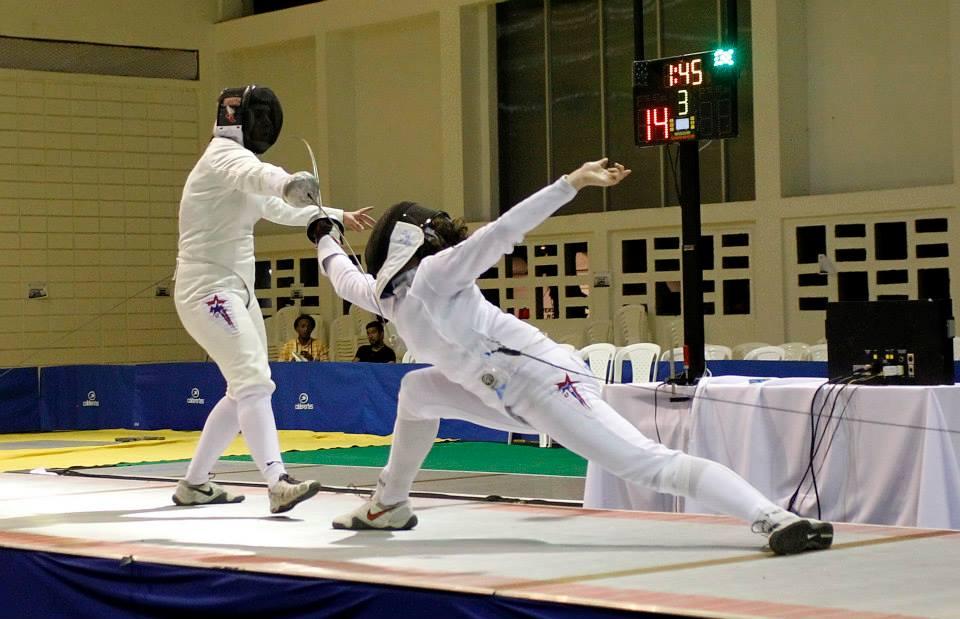
To understand why this might be the case, it is helpful to think about what fencing involves. The sport is built around repeated, explosive movements, particularly the lunge.
Each lunge requires a powerful push from the back leg, followed by rapid deceleration as the front leg lands and absorbs force. The two legs are doing very different jobs. The back leg is responsible for propulsion, driving the body forward, while the front leg has to brake and stabilise the movement on landing.
Our previous research has shown that when the front foot hits the ground, the impact travelling up the tibia can be around 12–13% of body weight with each lunge. That might not sound like much in isolation, but when repeated hundreds or thousands of times in training and competition, it starts to add up.
This movement is not only high in intensity but also highly repetitive and asymmetrical. Most fencers lead with the same leg for years, often decades. Over time, this creates a pattern of repeated loading through the same joints. The hip plays a central role in transferring force and stabilising movement, which may help explain why it is particularly affected over the long term. This repeated braking load may also help explain why we saw more joint replacements in the lead leg compared to the rear leg.
But what other factors may be at play?
Age? Yes!
The strongest and most consistent finding from the study was the role of age. The likelihood of having undergone a joint replacement increased with age, with a more marked rise in older age groups rather than a simple, steady increase year by year.
This is not unique to fencing, as joint degeneration is a natural part of ageing. However, in veteran fencers, ageing is likely to interact with decades of sport-specific loading. The combination of time and repeated movement patterns appears to be particularly important, with risk accumulating over the lifespan rather than changing in a strictly linear way.
Years of Fencing? Yes!
There was also evidence that years spent fencing play a role, particularly in relation to hip replacements. Fencers who had participated for longer were more likely to report hip replacement, even when age was taken into account. Interestingly, this pattern was not as clear for knee replacements. This suggests that it is not simply being active that matters, but the specific demands of fencing over time. The repeated unilateral movements and braking forces involved in lunging may place unique stresses on the hip joint.
Training load? No!
One of the more reassuring findings was that current training load did not appear to be linked to joint replacement. Fencers who trained more frequently were not more likely to have undergone surgery than those who trained less. This indicates that what you are doing now may be less important than what you have done over the course of many years. Current training volume does not fully capture the cumulative load experienced across a fencing career, particularly during earlier periods of higher intensity or competition.
Weapon? No!
The study did not find clear differences between foil, épée, and sabre in relation to joint replacement. While there are some tactical and stylistic differences between the weapons, the fundamental movement patterns, particularly the repeated lunge and asymmetrical stance, are shared across all three.
This likely explains why similar patterns of joint loading are seen regardless of weapon. It is also worth noting that the number of cases within each group was relatively small, so subtle differences may not have been detectable.
What are the main take aways?

These findings are not a reason to stop fencing. Instead, this research highlights the importance of thinking about long-term participation. Fencing may be a sport for life but maintaining that longevity requires an awareness of how the body adapts over time.
1 . Fence smarter, not harder
2. Build strength in the hips, glutes, and core to better absorb and control forces
a. Hip mobility: https://www.hertssportsvillage.co.uk/7-way-hip-training-video-24
b. Glute bridges: https://www.hertssportsvillage.co.uk/glute-bridge-hold-training-video-36
c. Glute clams: https://www.hertssportsvillage.co.uk/glute-clams-training-video-606
d. Planks for core training: https://www.hertssportsvillage.co.uk/plank-training-video-333
3. Address small aches and pains early, particularly around the hip and groin
a. Try some foam rolling: https://www.youtube.com/watch?v=9dFlFARkckk
4. Include variety in training to reduce repetitive stress
5. Take a long-term view of training and recovery, rather than focusing only on short-term performance

Winner of the Kings Award for Enterprise